- Unaligned Newsletter
- Posts
- AI for Strategic Forgetting
AI for Strategic Forgetting
Systems that Decide What Organizations Should Unknow


Robert Scoble & Irena Cronin
January 06, 2026
Thank you to our Sponsor: YouWare

Most organizations treat data like treasure. They keep almost everything they collect, from old customer logs and obsolete models to ancient PowerPoints that nobody remembers writing. Storage is cheap, backups are automated, and there is always a feeling that some forgotten file might someday be useful.
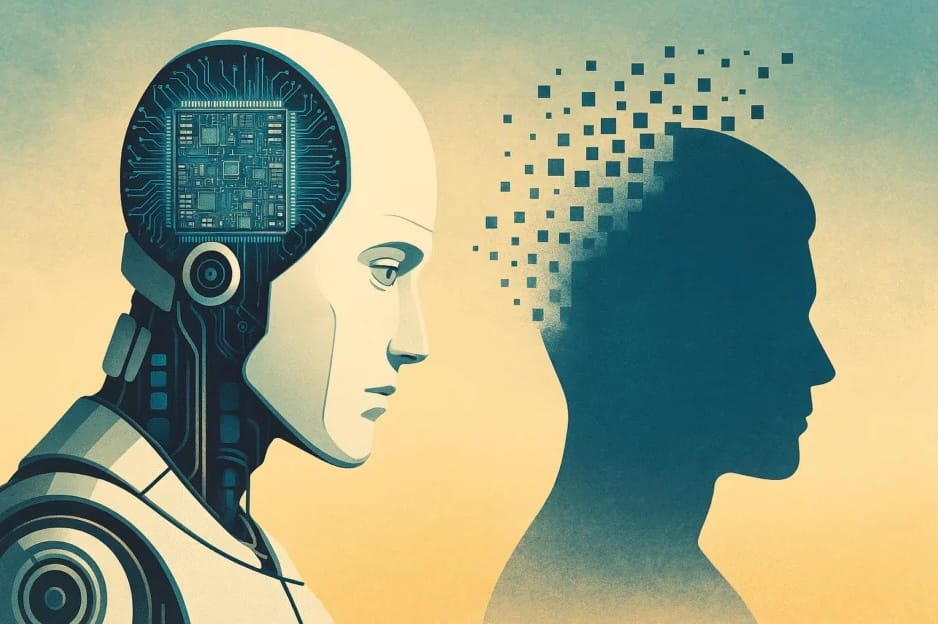
But constant accumulation creates its own dangers. Hidden inside all that history are biased datasets that still influence models, obsolete medical or financial guidelines, security keys that should have expired, and detailed records about people who asked to disappear. The problem is no longer just how to remember more. It is how to decide what to forget.
AI for strategic forgetting is about building systems that can examine an organization’s memory and propose, or even execute, what should be actively unknown. These systems are not simple trash collectors. They are decision makers that weigh risk, value, and ethics across millions of artifacts at once.
WHY ORGANIZATIONS NEED TO UNKNOW
Intentional forgetting sounds risky until you list the harms that come from keeping everything.
A strategic forgetting system would constantly watch for categories such as these.
• Harmful legacy knowledge
Old manuals that quietly encode discriminatory hiring practices or redlining style lending rules. They might be “for reference only” yet still shape decisions.
• Outdated models and decision rules
Scoring systems trained on economic conditions from a decade ago. Disease triage models that ignore a new treatment. Compliance rules that assumed different laws.
• Biased or toxic datasets
Image collections with skewed demographics, chat logs full of slurs, browsing histories that were collected without consent. These can keep re-contaminating new models.
• Sensitive personal data that no longer has a legal basis
Customer data past retention limits, records from people who invoked a right to be forgotten, location traces that are no longer needed for any service.
• Security time bombs
Old API keys, credentials of departed employees, encryption keys that should have rotated years ago.
Keeping these things “just in case” can lead to real damage. A biased training set discovered in a lawsuit. A leak of ancient but still sensitive medical data. A regulator asking why a company still holds information it has no reason to keep.
The idea behind strategic forgetting is that memory is a liability as well as an asset. Forgetting, when done carefully, is a form of risk management.
HOW AN AI SYSTEM WOULD REASON ABOUT FORGETTING
A serious forgetting system needs more structure than a set of manual deletion rules. It has to reason through questions that are too complex for human compliance teams to track by hand. For any document, dataset, or model, it might estimate:
• Utility score
How often is this artifact used in practice
How central is it to current products, research, or operations
• Risk score
What kinds of harm could result if it leaks or is misused
Does it contain personal data, sensitive attributes, or trade secrets
• Bias and toxicity indicators
Does it encode demographic skew, abusive language, or unfair decision patterns that have already been flagged elsewhere
• Entanglement with other systems
Which models were trained on this dataset
Which policies or product features depend on this document
• Legal and contractual status
Retention deadlines, consents, legal holds, or obligations to delete after a given event
To do this, the system needs deep visibility into the organization’s memory. It would crawl storage buckets, model registries, internal wikis, ticketing systems, version control, and data catalogs, then build something like a knowledge graph that links artifacts to each other and to the systems that use them.
From there, it can start to propose actions such as:
• Safe to delete outright because the artifact is unused, low value, and high risk.
• Move to cold encrypted archive with strict access, because it may be needed for compliance but should no longer influence daily operations.
• Keep but detach from training pipelines, forcing future models to ignore it.
• Trigger model unlearning routines where specific data points must be removed from an already trained system.
The point is not that the AI chooses alone. In most serious organizations, human review would remain mandatory for high impact decisions. But without AI triage, humans have no hope of even seeing the relevant candidates in the first place.
STRATEGIC FORGETTING IN PRACTICE
Imagine a global bank trying to clean up decades of credit scoring history. Somewhere in its archives lie datasets from the nineteen nineties that included race and zip code as explicit variables. Those fields were later removed, but clones of the early data slipped into internal research repos and continue to feed side projects.
A forgetting system could surface patterns such as:
• Multiple derivative datasets that can all be traced back to the original discriminatory corpus.
• Models shipping in niche products whose weights show heavy dependence on proxy variables linked to race.
• Documentation and training slides that still teach analysts to rely on high level rules crafted during that era.
Based on this, it might recommend that the original data be moved to a locked legal archive, all derivative datasets be deleted, and specific models be scheduled for retraining on cleaned data. It might also propose knowledge base updates that explicitly flag the old practices as unacceptable, preventing future reintroduction.
In a different example, consider a health tech company storing detailed sensor data from patients long after it is needed. The AI could correlate retention policies, consent forms, and usage patterns to identify entire cohorts whose data functions only as liability.
It could say, in effect:
• These ten million records have not been accessed in three years.
• They contain raw biometric streams and precise location.
• The original consent forms required deletion after study completion, which ended last year.
• They were never used to train any production models.
That is an excellent candidate for automated erasure.
Thank you to our Sponsor: NeuroKick

MECHANISMS OF FORGETTING
Strategic forgetting is more subtle than pressing a delete key. Once information has seeped into models, caches, backups, and derivative analyses, it must be unwound with care. AI can orchestrate several layers.
• Source deletion
Remove the primary copies from active storage, update catalogs and indexes, and ensure that future replication jobs do not recreate them.
• Model unlearning
Apply techniques that estimate how much a model’s predictions depend on particular data points and adjust weights to remove that influence. This might involve retraining from scratch for small models or targeted unlearning for large ones.
• Pipeline re-wiring
Edit feature stores, training scripts, and QA tests so that removed data cannot sneak back in.
• Backup and archive scrubbing
Track where the data appears in disaster recovery systems and either encrypt it with keys that will be discarded or fully rewrite those portions of storage.
All of this can be guided by AI tools that maintain dependency graphs. Without those graphs, teams easily forget that a single spreadsheet seeded half a dozen models and two downstream analytics projects years ago.
RISKS AND FAILURE MODES
Giving AI the authority to recommend or execute forgetting is powerful and risky. Several failure modes stand out.
Over forgetting
The system might treat anything rare or controversial as a risk to be removed, purging historical records that are essential for accountability. For example, internal discussions about product harms are uncomfortable yet vital for future investigators.
Political misuse
Leadership could intentionally tune the system to erase evidence of wrongdoing, blaming the AI when critics ask why certain documents vanished. Strategic forgetting must never become a corporate memory hole.
Hidden value destruction
Data that looks unused might hold unexpected value for science or social history. Erasing it without consultation could close off future insights.
To reduce these risks, forgetting systems need rules such as:
• Preserve audit logs of every deletion decision, including rationale, responsible parties, and alternatives that were considered.
• Maintain a protected class of artifacts that can only be moved to sealed archives, not destroyed. This might include whistleblower reports, safety incident logs, and communications under legal hold.
• Involve cross functional review panels where ethicists, legal experts, engineers, and affected teams can veto automated recommendations.
GOVERNANCE AND TRANSPARENCY
AI for strategic forgetting changes organizational governance. Decisions about what to unknow should be treated with the same seriousness as decisions about what to build.
Some practical governance patterns include:
• Forgetting charters
Written statements of principles that specify which values trump others. For example, “honor data subjects’ deletion rights even at the cost of some model accuracy” or “never erase evidence relevant to safety or discrimination claims.”
• Forgetting committees
Groups that review high risk recommendations, much like institutional review boards in research or change advisory boards in operations. They can approve, reject, or modify AI proposals.
• Regular public reporting
Anonymized statistics on how much data was deleted, how many models were retrained, and how many recommendations were rejected provide accountability to regulators, partners, and the public.
• Independent audits
External auditors with access to logs and system configurations can confirm that the forgetting AI is not quietly biased toward convenience or self-protection.
If these structures work, AI becomes a tool for institutional humility rather than denial. It helps organizations admit that some of what they once knew should no longer shape their actions.
CULTURAL EFFECTS OF LEARNING TO FORGET
When strategic forgetting becomes normal, culture shifts. Engineers stop assuming that data collected today will exist forever. Product teams learn to justify why they want to keep something past a default time limit. Researchers become used to documenting potential harms and biases in datasets, knowing that those descriptions will later feed into forgetting decisions.
There is also an educational effect. The forgetting system constantly surfaces examples of harmful legacy knowledge that must be removed. All those alerts and reports become a living curriculum in how bias and misuse creep into systems.
You could imagine internal dashboards that show:
• The datasets most frequently flagged for risk this quarter.
• The models that had to be retrained because they were built on questionable foundations.
• The historical practices that recent deletions have finally broken with.
Employees start to see forgetting not as embarrassment but as progress a sign that the institution is correcting its own memory.
LOOKING AHEAD: FORGETTING AS A CORE CAPABILITY
As AI permeates every part of business, managed forgetting will become as central as managed security. No serious organization leaves access control entirely manual. In the same way, no serious organization will rely on purely human judgment to decide what knowledge should quietly fade away.
AI for strategic forgetting does something deeper than saving storage space or avoiding fines. It reintroduces a very human capacity into digital systems: the ability to let go of what no longer serves. The challenge is to encode forgetting in a way that protects the vulnerable, maintains accountability, and keeps living systems from becoming prisoners of their own past.
Done well, these tools will act like an internal conscience, constantly asking whether every piece of remembered information still deserves its place. They will recommend not only what to know next, but what to unknow, so that organizations can grow without being bound forever to their earlier mistakes.
Looking to sponsor our Newsletter and Scoble’s X audience?
By sponsoring our newsletter, your company gains exposure to a curated group of AI-focused subscribers which is an audience already engaged in the latest developments and opportunities within the industry. This creates a cost-effective and impactful way to grow awareness, build trust, and position your brand as a leader in AI.
Sponsorship packages include:
Dedicated ad placements in the Unaligned newsletter
Product highlights shared with Scoble’s 500,000+ X followers
Curated video features and exclusive content opportunities
Flexible formats for creative brand storytelling
📩 Interested? Contact [email protected], @samlevin on X, +1-415-827-3870
Just Three Things
According to Scoble and Cronin, the top three relevant and recent happenings
Meta Bets $2 Billion on Manus, the Money-Making AI Agent Startup
Meta is acquiring Manus, a fast-growing Singapore-based AI agent startup, for about $2 billion after it hit millions of users and over $100 million in annual recurring revenue with its “do-it-for-you” AI agents. Meta plans to keep Manus running independently while integrating its agents into Facebook, Instagram, and WhatsApp, but has pledged to sever Manus’ Chinese ownership and shut down its operations in China to head off political and regulatory concerns. TechCrunch
Inside Yann LeCun’s Breakup with Meta
Yann LeCun says he left Meta because Mark Zuckerberg pushed the company to focus on “safe,” LLM-centric products and sidelined his long-term “world model” research, leading to failures like the poorly received Llama 4. Tension escalated when Zuckerberg created a new Superintelligence Labs group, put 29-year-old Alexandr Wang in charge, and had LeCun report to him, which LeCun felt was incompatible with his independence as a senior researcher. He is now starting his own world-model-focused company, Advanced Machine Intelligence Labs, where he expects to regain scientific freedom. Futurism
Teaching Hollywood’s Kids to Use AI Without Losing the Human Element
Elite LA private schools that serve Hollywood families have moved from panicking about AI cheating to cautiously integrating it, using safeguards like in-class writing and browser lockouts while also offering AI camps, tutoring chatbots, and classroom experiments. Students and educators are now wrestling with ethical use, competitiveness, environmental impact, and how to redesign education around human skills instead of memorization in an AI rich world. The Hollywood Reporter
Scoble’s Top Five X Posts