- Unaligned Newsletter
- Posts
- Physical AI


Thank you to our Sponsor: Morphic

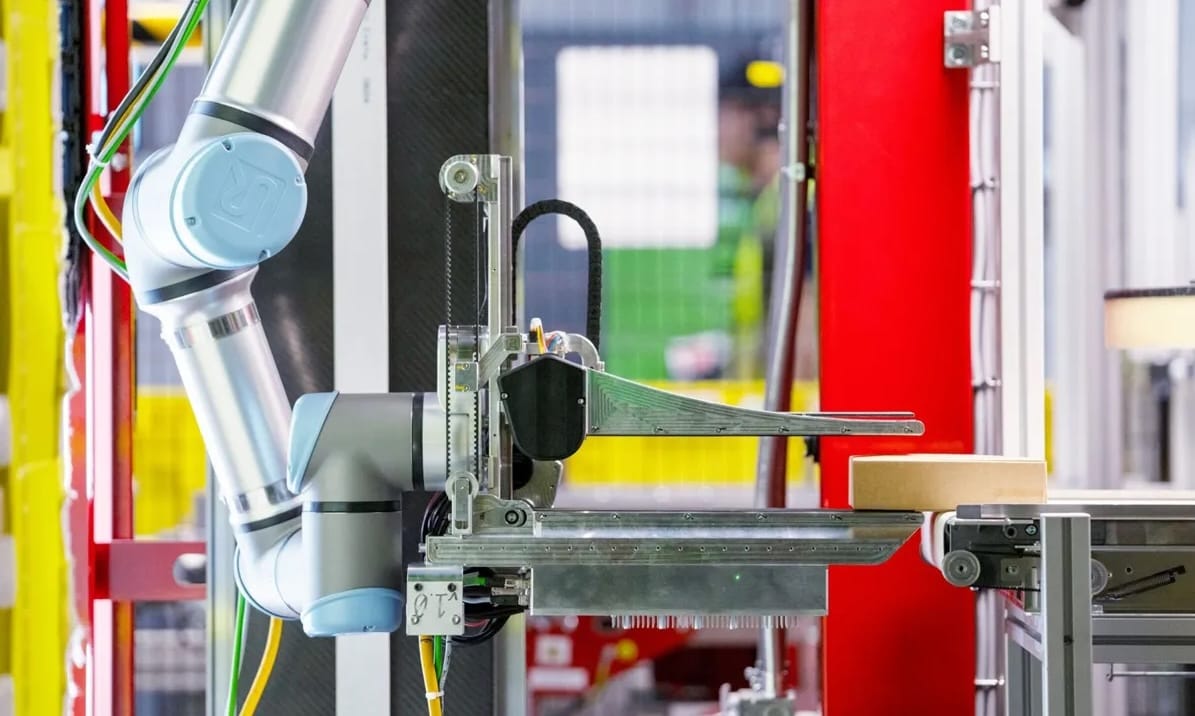
For years, AI was mostly understood as a software story. People associated it with chatbots, search tools, image generators, recommendation engines, and digital assistants. The biggest conversations were about model performance, user adoption, and which company had the most advanced system. That is still part of the picture, but it is no longer the full picture. AI is now moving into the physical economy.
This shift matters because it changes what progress means. In the software world, success can be measured by speed, fluency, convenience, and engagement. In the physical world, the standards are tougher. A machine has to move safely, respond to changing conditions, work around people, and complete tasks accurately in real environments. It cannot simply sound impressive. It has to perform.
FROM DIGITAL AI TO PHYSICAL AI
Initially, most people experienced AI through writing tools, coding assistants, search, customer service bots, and content generation. These applications were highly visible, easy to use, and easy to share. They made AI feel like something that lived on a screen.
That is beginning to change in a major way. AI is moving beyond the screen and into machines that interact with the physical world. This means AI is being used not just to process information, but to support motion, perception, coordination, and action. That is a very different kind of challenge.
In factories and industrial settings, AI must handle:
• Movement
• Timing
• Object recognition
• Spatial awareness
• Safety constraints
• Changing environmental conditions
• Coordination with human workers
This is why the new phase of AI feels so important. It is no longer only about generating language or images. It is about helping machines operate in real environments where mistakes have real costs.
WHY THIS SHIFT MATTERS
The movement of AI into factories and robotics could reshape a large part of the economy. Software AI can improve office productivity, automate digital tasks, and support research or communication. Physical AI has the potential to affect manufacturing, logistics, mining, warehousing, transportation, and industrial maintenance.
This is where some of the biggest long-term value may be created. If AI can make industrial systems more adaptive, more productive, and more efficient, then its impact could stretch far beyond the software sector.
Why this matters:
• Manufacturing is a core part of national economic strength
• Industrial automation can raise output and reduce waste
• Robotics can help address labor shortages in difficult jobs
• AI can improve flexibility in production environments
• Physical AI could unlock major productivity gains across multiple sectors
In other words, this is not just another AI feature story. It is a shift in where AI may create value at scale.
FACTORIES ARE BECOMING THE NEXT AI TEST
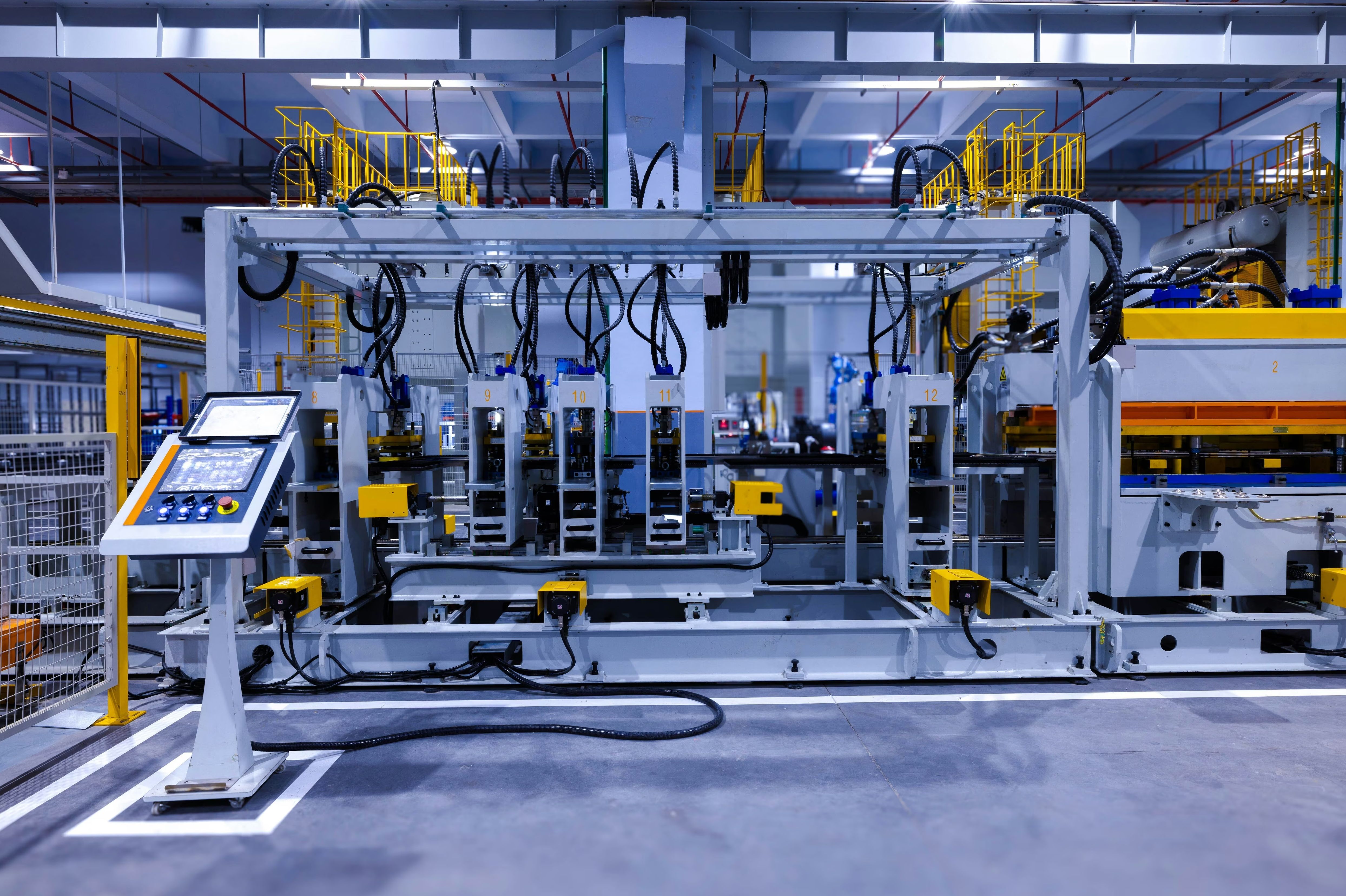
Factories are one of the clearest places where this transition is happening. They are structured enough to support automation, but still complex enough to challenge machines. That makes them an ideal testing ground for AI powered robotics.
Traditional industrial robots have existed for decades, but they usually perform very narrow, repetitive tasks. They are useful, but rigid. They often need carefully programmed instructions and controlled environments. If conditions change, they can struggle.
AI is now being used to make robots more flexible and more capable. Instead of being locked into a single repetitive action, machines are being trained to interpret surroundings, adapt to variation, and perform a broader set of tasks.
This matters because factories need more than repetition. They need systems that can:
• Handle changing workflows
• Work with varied parts and materials
• Support human workers safely
• Adjust to different product types
• Reduce downtime and inefficiency
That is why the industrial setting has become such a major arena for AI deployment.
THE RISE OF SPECIALIZED ROBOTS
One of the biggest misconceptions in robotics is that the future must belong only to humanoid machines. Humanoid robots get attention because they look dramatic and are easy to imagine in human environments. But in business and industry, specialized robots may prove more useful in the near term.
A factory, warehouse, or mining site does not necessarily need a robot that looks human. It needs a machine that can do a task well, safely, and repeatedly. That is why many companies are focusing on purpose built industrial systems rather than trying to imitate the human body in every setting.
Specialized robots are attractive because:
• They can be designed around clear industrial tasks
• They may be easier to deploy than general humanoids
• They can be more efficient in controlled settings
• They are easier to evaluate based on return on investment
• Businesses care more about function than appearance
The real opportunity may not be in building robots that resemble people. It may be in building machines that make industrial work faster, safer, and more adaptable.
Thank you to our Sponsor: EezyCollab

WHY COMPANIES ARE PUSHING NOW
There are several reasons this shift is accelerating now rather than five years ago.
The technical foundation is stronger. Advances in computer vision, multimodal models, edge computing, simulation, and specialized chips have made it more realistic to run sophisticated AI systems inside machines.
Also, the economic pressure is intense. Manufacturers and industrial companies are under constant pressure to improve efficiency, manage labor shortages, reduce errors, and stay competitive. AI powered robotics promise a more flexible kind of automation than older industrial systems.
Additionally, companies increasingly see AI as a way to modernize legacy operations, not just launch new software products. That means AI is becoming part of industrial strategy.
What is driving the shift:
• Better models for perception and action
• Faster and more capable chips
• Rising pressure to modernize factories
• Demand for more resilient supply chains
• Interest in domestic manufacturing capacity
• The need to reduce repetitive and hazardous work
All of these forces are converging at once, which is why physical AI is gaining momentum.
THE NEW INDUSTRIAL AI STACK
As AI moves into factories and robotics, a new industrial stack is taking shape. This stack is more complex than a simple software product because it involves both digital intelligence and physical hardware.
The major layers include:
• The model layer, where AI systems learn perception, reasoning, and control
• The hardware layer, including sensors, actuators, cameras, and chips
• The deployment layer, where machines enter real production environments
• The data layer, where physical interaction generates training and feedback
• The integration layer, where AI systems are connected to actual workflows and safety requirements
This matters because success in physical AI depends on more than a good model. A robot can work well in a demo and still fail in a factory if the hardware is unreliable, the maintenance is too complex, or the workflow integration is poor.
Physical AI is harder because:
• Real environments are unpredictable
• Safety matters much more
• Mechanical reliability is essential
• Downtime is expensive
• Edge cases are harder to ignore
• Return on investment must be clear
This makes the industrial AI challenge more difficult, but also more meaningful.
THE LABOR QUESTION
Whenever AI moves into real world work, labor concerns become unavoidable. People naturally worry that smarter machines will replace human workers. That concern is real, but the likely outcome is more complicated than full replacement.
In many industries, AI and robotics will first automate narrow tasks rather than whole roles. Machines may take over repetitive, physically demanding, or dangerous activities, while humans remain responsible for supervision, quality control, decision making, and exception handling.
Likely changes include:
• Some repetitive tasks will be automated
• Some jobs will be redesigned rather than eliminated
• New roles will appear in maintenance and supervision
• Workers will need retraining in mixed human machine environments
• Human judgment will remain important in many operations
The future of industrial AI is therefore not just about replacing labor. It is also about redefining labor. Companies that manage that transition well may gain not only productivity, but also resilience and better workplace safety.
WHAT MAKES THIS DIFFERENT FROM THE SOFTWARE PHASE
Software AI moved quickly because deployment was relatively cheap and failure was often manageable. If a chatbot gave a weak answer, the damage was limited. If a writing tool made a clumsy suggestion, the user could correct it.
Physical AI is different. A robot that misjudges its environment can damage equipment, disrupt production, or create safety risks. That means progress in factories and robotics will likely be slower and more measured than progress in consumer software.
That slower pace does not make it less important. In fact, it may make it more important, because every successful deployment represents a deeper form of capability.
Key differences between software AI and physical AI:
• Software can be updated instantly while hardware deployment is slower
• Errors in factories are more costly than errors in chat
• Physical systems need reliability, not just intelligence
• Industrial customers care about uptime and safety as much as innovation
• Real world deployment requires stronger integration with existing operations
The physical phase of AI is harder, but it may also be where AI proves its real economic power.
AI is moving from software into factories and robots, and that shift could define the next chapter of the technology. For years, the focus was on what AI could say, write, generate, and recommend. Now the focus is beginning to expand toward what AI can help machines do in the physical world.
That is a major transition. It means AI is no longer just a tool for digital productivity. It is becoming part of manufacturing, logistics, industrial strategy, and automation in the real economy.
The most important change is simple:
• AI is moving from analysis to action
• It is moving from screens to systems
• It is moving from digital tasks to physical work
• It is moving from software convenience to industrial capability
The companies that lead this shift may not just build popular AI tools. They may help redesign how factories operate, how robots learn, and how production works in the years ahead.
This is why the movement of AI into factories and robotics matters so much. It is not just another extension of software. It is the beginning of a new phase in which AI starts to shape the physical economy itself.
Looking to sponsor our Newsletter and Scoble’s X audience?
By sponsoring our newsletter, your company gains exposure to a curated group of AI-focused subscribers which is an audience already engaged in the latest developments and opportunities within the industry. This creates a cost-effective and impactful way to grow awareness, build trust, and position your brand as a leader in AI.
Sponsorship packages include:
Dedicated ad placements in the Unaligned newsletter
Product highlights shared with Scoble’s 500,000+ X followers
Curated video features and exclusive content opportunities
Flexible formats for creative brand storytelling
📩 Interested? Contact [email protected], @samlevin on X, +1-415-827-3870
Just Three Things
According to Scoble and Cronin, the top three relevant and recent happenings
OpenAI Plans Major Hiring Push
OpenAI is reportedly planning a major expansion, aiming to grow its workforce from about 4,500 to 8,000 by the end of 2026. Most new hires are expected to go into product development, engineering, research, sales, and technical roles that help businesses use OpenAI’s tools more effectively. The report also suggests the company is moving with urgency, after Sam Altman reportedly pushed teams to speed up development in response to growing competition from Google. Reuters
Jeff Bezos Eyes $100 Billion AI Industry Fund
Jeff Bezos is reportedly seeking $100 billion for a new fund tied to his AI startup Project Prometheus. The goal is to buy established industrial companies in sectors like aerospace, chipmaking, and defense, then modernize and automate them using Prometheus’ AI models. The plan suggests a major push to use AI not just in software, but to transform traditional manufacturing businesses at scale. TechCrunch
Val Kilmer Returns Through AI in As Deep as the Grave
Val Kilmer is being brought to the screen through AI in As Deep as the Grave, a role he had originally been cast in years before his death but was too ill to film because of throat cancer. Director Coerte Voorhees says the part of Father Fintan was specifically created with Kilmer in mind, drawing on his Native American heritage and his connection to the Southwest. The use of AI is allowing the film to realize a performance that illness had prevented during his lifetime. Variety
Scoble’s Top Five X Posts