- Unaligned Newsletter
- Posts
- Synthetic Unions
Synthetic Unions
AI Agents Bargaining On Behalf Of Workers


Robert Scoble & Irena Cronin
December 02, 2025
Thank you to our Sponsor: NeuroKick

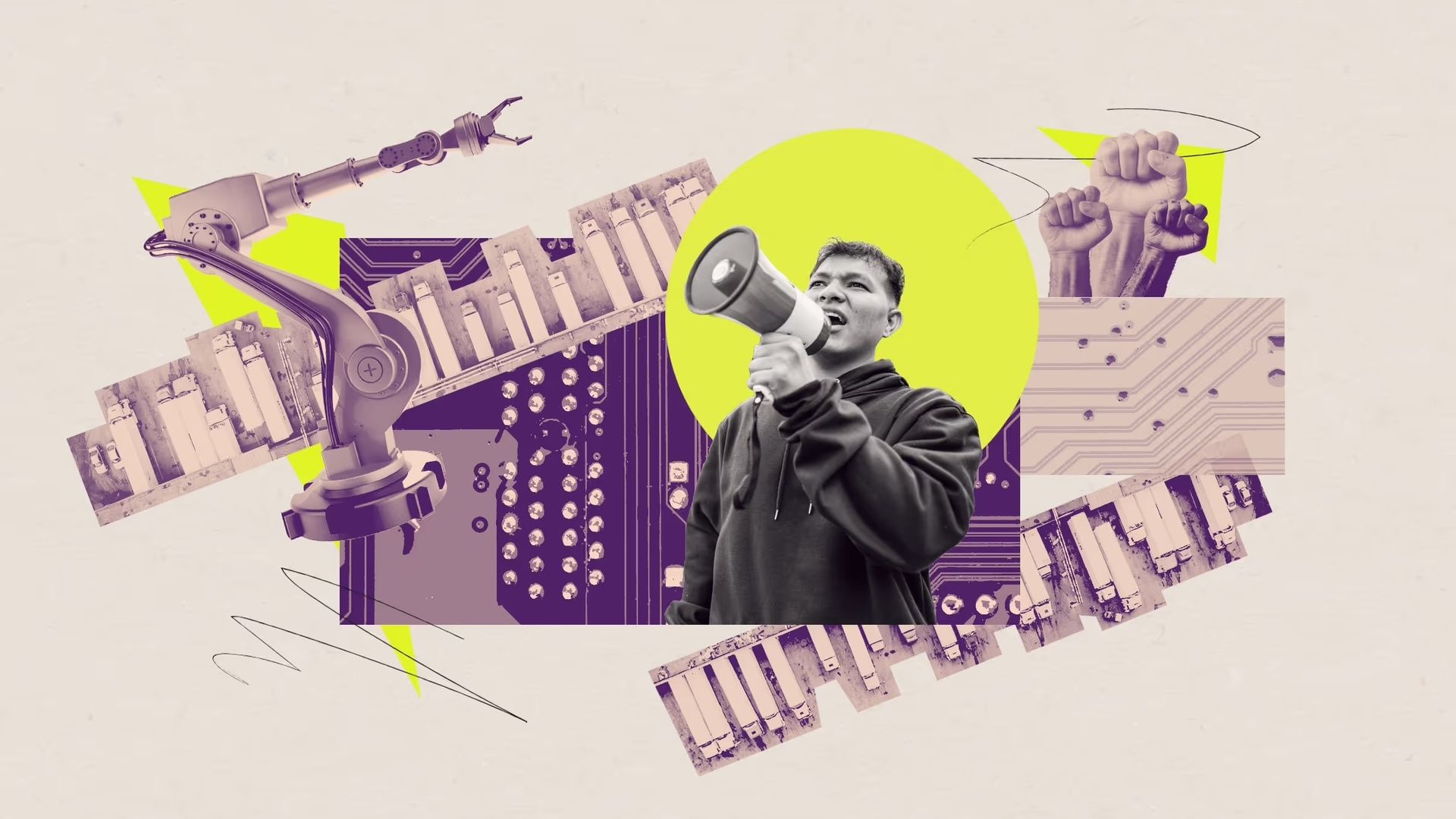
The idea of a labor union usually conjures images of people at a negotiating table, legal teams in the background, and strike lines outside factory gates or office buildings. Now imagine that much of the analytical heavy lifting in that process is carried out by synthetic representatives, AI bargaining agents that know every line of the company’s financials, can simulate thousands of contract scenarios in minutes, and can forecast the impact of a strike on revenues, supply chains, and brand perception with unusual precision. Human leaders still set goals and vote on outcomes, but the day-to-day strategy, modeling, and counterproposal generation are handled by software.
This is the concept of synthetic unions: labor organizations that remain fundamentally human in purpose and governance, yet rely on AI agents as their primary tactical negotiators. These agents would not simply automate paperwork. They would function as high powered strategic partners that understand both the employer and the workforce at a level of detail no human team could match.
Why workers might want AI negotiators
Unions have always had to fight information asymmetry. Companies hold more precise data about profits, margins, productivity, and future plans. A bargaining committee tries to infer what is possible, often relying on partial data, expert opinion, or public filings that lag reality by months. AI bargaining agents would attack that asymmetry head on.
A synthetic union could draw on:
• Public financial filings, earnings calls, analyst reports, and credit market data
• Supply chain and industry benchmarks that reveal how similar firms compensate workers
• Macro indicators such as inflation, local housing costs, and health care pricing
• Internal surveys and anonymized worker data on burnout, turnover, and workplace safety
By fusing these sources, an AI agent could build a detailed picture of what the company can truly afford, which concessions are symbolic rather than structural, and where hidden slack exists in budgets or schedules. The union still decides what to demand, but it would be doing so with a far more accurate map of the territory.
Capabilities of a synthetic bargaining agent
An AI system designed for union negotiation would need several key capabilities.
It must be able to model the firm. That means forecasting revenue under different economic scenarios, estimating the cost of wage increases or new benefits, and understanding how changes in staffing levels affect output. This is similar to what internal corporate strategy teams already do. The difference is that the union would have its own dedicated model, trained to optimize worker interests rather than shareholder value.
It must also be able to model the workers themselves. This includes attrition risk, skill distribution, replacement costs, and the social dynamics that determine how long a strike could be sustained. An agent that knows when members are near their financial limits or burnout thresholds could advise leaders when to escalate and when to compromise.
A mature system might be able to:
• Generate proposed contracts that remain inside financially feasible boundaries while maximizing gains for workers
• Simulate strike scenarios over various durations, including company response strategies and likely public opinion
• Identify creative, non obvious trade offs, such as equity grants, schedule flexibility, or retraining funds instead of simple wage increases
• Track legal and regulatory constraints in real time so that proposals stay compliant across jurisdictions
In negotiations, the agent could respond to company proposals by instantly recalculating the long term impact on pay, workload, and job security, and then generating counteroffers aligned with union red lines.
Human leaders in the loop
Even the most capable synthetic union would still require human governance. Members must define priorities: is the primary goal higher base pay, better health coverage, a shorter workweek, or stronger protections against automation. The AI can explore trade spaces, but it should be optimizing against objectives that are democratically chosen.
One useful vision is a tiered structure. At the top, an elected leadership sets strategic goals and approves final deals. Beneath them, a negotiation committee works directly with the AI system, reviewing its recommendations, adjusting constraints, and checking that the tactics remain consistent with member sentiment. On the ground, workers provide a steady stream of feedback through secure channels, which the system incorporates into its models.
A synthetic union should therefore function as an amplifier of collective intelligence rather than a replacement for it. The AI can propose, simulate, and forecast, but only humans can legitimately decide what is fair, dignified, or acceptable.
How employers might respond
At first glance, employers may fear AI empowered unions. Yet synthetic unions could also make negotiations more predictable and efficient for companies. Today, bargaining can be messy, with both sides resorting to brinkmanship because neither fully trusts the other’s numbers. A system that operates transparently, exposes assumptions, and grounds proposals in shared data could reduce misunderstanding.
Companies might find it easier to plan capital expenditure and hiring if contracts are generated through structured simulations rather than last minute stand offs. AI based forecasting could highlight mutually beneficial solutions, such as productivity investments that fund pay increases without threatening margins.
Of course, employers will not simply accept union AI while remaining analog themselves. Corporate bargaining teams are likely to deploy their own agents, leading to negotiations between two software systems that simulate strategies, search for Nash equilibria, and test concession patterns. Human negotiators would supervise, but much of the tactical back and forth could occur at machine speed, with summaries delivered to each side.
Information warfare and the risk of asymmetric AI
Once both sides use AI, questions arise about fairness and power. A global corporation with massive resources could invest in extremely sophisticated modeling and legal reasoning tools. A workers’ organization with limited funds might depend on open source agents or shared infrastructure. If model quality diverges too much, the side with superior AI could dominate negotiations, even if their actual bargaining position is weaker in classic economic terms.
There is also the possibility of information warfare. A company could attempt to feed misleading signals into public data streams to distort the union’s models, or lobby for regulations that restrict what datasets synthetic unions can legally use. Conversely, unions might use their own agents to scrutinize corporate filings, attack inconsistencies, or coordinate shareholder campaigns that expose underreported profits.
To maintain legitimacy, a synthetic union would need robust verification pipelines. For example:
• Independent auditors could review its models to ensure they are not contaminated with manipulated data
• Legal experts could verify that its negotiation strategies respect labor law, antitrust rules, and privacy protections
• Third party platforms might provide common, trusted financial data layers so that both sides start from an agreed factual baseline
Without such safeguards, bargaining could devolve into a contest of whose AI is better at deception rather than whose case is more just.
Privacy, surveillance, and worker autonomy
Another concern is how these systems learn about workers. To model attrition risk or financial pressure, an agent might want access to sensitive information about members’ debts, health, or family obligations. Even if individuals consent in theory, they may not fully grasp how deeply the system infers vulnerability.
A responsible synthetic union would need strict privacy constraints. It might aggregate data at cohort level rather than tracking individuals. It might allow members to opt in to higher resolution modeling in exchange for more tailored support, such as strike funds that are allocated with a clear understanding of who can withstand work stoppages and who cannot.
There is also a risk that companies could demand access to union AI outputs or try to mirror them, effectively turning the system into a tool of surveillance against the workforce. Legal firewalls and strong encryption would be essential. Synthetic unions must defend workers not only at the bargaining table but also in the informational environment.
Legal and regulatory challenges
Most labor law was written with human negotiators in mind. Collective bargaining agreements, representation rights, and dispute resolution processes assume that unions are run by people and that employers sit across a table from them. Introducing AI agents as formal negotiators raises questions.
Are the outputs of a bargaining model legally binding in the same way as a signed human proposal. Who is liable if an AI generated clause violates labor law or produces unforeseen harm. Can a company claim that it did not understand the implications of a union proposal because it was produced by a complex model, or can a union similarly disown a term that turned out to be problematic.
Regulators may need to clarify that the legal entity of the union remains responsible, even when it delegates tactical work to software. Ethical guidelines could require that any material clause in a contract be interpretable by humans, with AI only supplying structured analysis and drafting language that lawyers and members can review.
There might also be debates about equal access. Should governments or international bodies provide open source bargaining agents to unions so that every workforce, regardless of size or wealth, can compete with corporate technology. Might antitrust regulators consider extremely advanced employer side negotiation AI as a kind of unfair practice if workers cannot match it.
Potential benefits for workers and society
Despite the risks, the upside is significant. Synthetic unions could:
• Break the current pattern where only large, well funded unions can afford deep economic analysis
• Help workers in fragmented, gig based, or remote industries coordinate around fair standards
• Improve contract quality by exposing hidden costs and benefits that are opaque to human negotiators
• Shorten strikes by mapping out win win options more rapidly and providing realistic expectations to both sides
For workers in emerging AI intensive sectors such as data labeling, model evaluation, or content moderation, synthetic unions could be especially important. These jobs often sit inside complex global supply chains with opaque subcontracting. An AI agent with access to trade data and corporate networks could uncover who really controls the work and where pressure would be most effective.
The presence of synthetic unions might also shift public discourse about automation. Instead of treating AI solely as a replacement for labor, society would see AI deployed as a tool of labor power. That symbolic reversal could influence how future technologies are developed and regulated.
Everyday life inside a synthetic union
For individual members, much of this would feel ordinary. They might interact with a conversational interface that explains contract proposals, shows simulations of their future earnings under different scenarios, and answers questions about pension or health benefits with fine grained detail. The same system could alert them to important votes, coordinate strike logistics, and offer personalized suggestions for reskilling or career development based on union negotiated training programs.
Members could even query the bargaining agent directly. For example: “What would it cost the company if we moved from a five day workweek to four days at current pay, and how would that compare to a ten percent wage increase.” The system could generate clear, visual explanations that help workers understand the trade offs that leadership is considering.
This type of transparency might increase participation. Many workers feel detached from union politics because the details are complex and time consuming. A well designed AI guide could bridge that gap.
Global and historical context
Synthetic unions would arrive in a world where labor movements vary widely by country. In some places, such as parts of Europe, unions already have strong institutional roles in corporate governance. In others, like parts of the United States, union density has fallen sharply and many workers lack representation.
AI bargaining agents might help rebuild organizing capacity where it has weakened by lowering the expertise threshold for starting and sustaining a union. A small group of workers could access tactics and models that once required large legal and economic departments.
Historically, each technological wave has reshaped labor relations: the industrial revolution produced factory unions, the information age brought service sector organizing, and the gig economy sparked new forms of platform based collective action. Synthetic unions would be the next stage in that pattern, an attempt to use advanced computation in service of worker power rather than only employer efficiency.
Future directions
Looking ahead, synthetic unions could collaborate across borders. Models trained on international economic data could coordinate bargaining strategies among workers in different countries who share a common employer or industry. This could counter the tactic of shifting production to jurisdictions with weaker labor protections.
There may also be opportunities for constructive cooperation. AI agents representing unions and employers could jointly optimize for mutual resilience, for example by finding contract terms that encourage companies to invest in worker training rather than layoffs when new automation tools arrive.
Ultimately, the question is not whether AI will enter labor negotiations. It is whether workers will have equal access to that power. Synthetic unions offer a path where AI becomes a shield and a voice for those whose leverage has often been limited by lack of information or resources. If designed with privacy, transparency, and democratic governance at their core, these systems could help rebalance the relationship between capital and labor in an era defined by intelligent machines.
Looking to sponsor our Newsletter and Scoble’s X audience?
By sponsoring our newsletter, your company gains exposure to a curated group of AI-focused subscribers which is an audience already engaged in the latest developments and opportunities within the industry. This creates a cost-effective and impactful way to grow awareness, build trust, and position your brand as a leader in AI.
Sponsorship packages include:
Dedicated ad placements in the Unaligned newsletter
Product highlights shared with Scoble’s 500,000+ X followers
Curated video features and exclusive content opportunities
Flexible formats for creative brand storytelling
📩 Interested? Contact [email protected], @samlevin on X, +1-415-827-3870
Just Three Things
According to Scoble and Cronin, the top three relevant and recent happenings
AI Agents Supercharge Black Friday Spending Amid Tariff Pressures
AI shopping assistants and chatbots helped fuel a record U.S. Black Friday online spend of about $11.8 billion, as consumers under inflation and tariff pressure used AI tools to find better prices and discounts. AI-driven traffic to retail sites jumped more than eightfold, influencing billions in global sales, but higher prices and flat discounts meant shoppers bought fewer items per order, shifting spending toward pricier goods and setting up an even larger Cyber Monday. Reuters
Will the AI Boom Ever Pay Off?
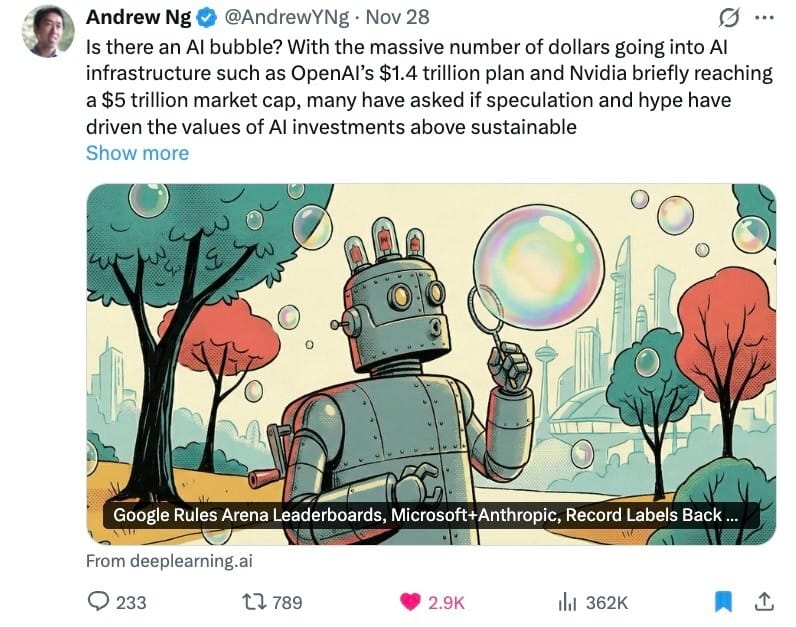
Experts are divided over whether today’s massive AI investments will ever generate profits large enough to justify trillions in spending. Proponents say revenue will come later, as happened with the early internet, while critics note that most firms are not yet making money from AI, infrastructure costs scale with every prompt, and the current level of data center and chip spending cannot be sustained without rapid, outsized returns. ABC News
DeepSeek’s Open Math-V2 Model Reaches IMO Gold-Level Performance
Chinese startup DeepSeek has open-sourced its Math-V2 model, the first AI system to reach gold-medal–level performance on International Mathematical Olympiad problems, including showing transparent, step-by-step reasoning. By enabling the model to “self-verify” its answers, even on problems without known solutions, DeepSeek aims to push AI beyond benchmark gaming toward genuine mathematical problem-solving, lowering the barrier for researchers and developers worldwide. The release contrasts with more closed approaches from rivals like Google DeepMind and OpenAI, highlighting a strategic split between open access and tightly controlled advanced math models. Interesting Engineering
Scoble’s Top Five X Posts