- Unaligned Newsletter
- Posts
- The Rise of AI Native Companies
The Rise of AI Native Companies


Robert Scoble & Irena Cronin
April 28, 2026
Thank you to our Sponsor: EezyCollab

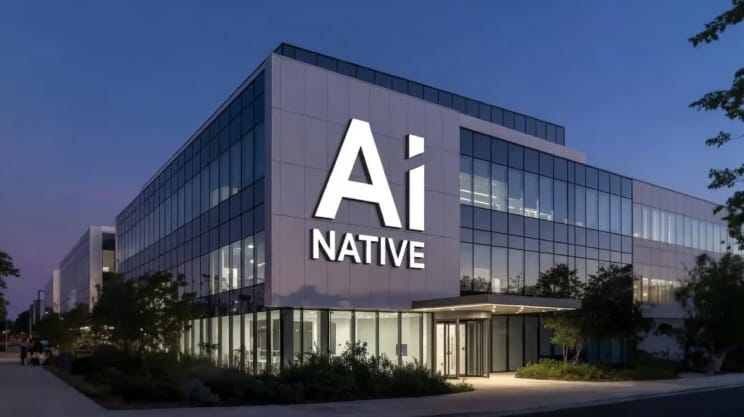
A new kind of company is beginning to take shape. It is not a traditional business with AI tools added on top. It is not a company that simply gives employees chatbots, coding assistants, or automated customer service software and calls that transformation. It is a company designed around AI from the beginning.
AI native companies will be built with a different operating model. They will assume that many tasks can be handled by software agents, automated workflows, and intelligent systems before more employees are added. Human workers will still matter, but their roles will shift toward judgment, strategy, supervision, creativity, relationship building, and accountability.
This shift changes the meaning of scale. In the past, growth usually required larger teams, more managers, more departments, and more coordination. A company that gained more customers needed more support staff. A company that sold more products needed more analysts, marketers, finance workers, and operations employees. Growth often meant complexity.
AI native companies challenge that pattern. They may be able to grow revenue, output, customer reach, and operational capacity without expanding headcount at the same pace.
What Makes a Company AI Native
An AI native company is not defined only by whether it uses AI tools. Almost every company will use AI. The difference is that an AI native company builds its structure, workflows, decision making, and growth strategy around AI from day one.
A traditional company usually begins with human processes. People write documents, manage projects, answer customer questions, analyze data, handle operations, and make decisions through meetings and reports. Later, the company may introduce AI to speed up parts of that work.
An AI native company starts with a different question. It asks what should be automated first, what should be handled by agents, what should be reviewed by humans, and what should remain fully under human control. AI is not attached to the business after the fact. It is built into the business architecture.
For example, an AI native company might design customer support so that AI handles routine questions, summarizes unresolved issues, detects repeated complaints, and escalates sensitive cases to humans. It might design sales so that AI researches prospects, drafts personalized outreach, updates CRM records, and recommends next steps. It might design product development so that AI helps write specifications, generate prototypes, run tests, document changes, and summarize feedback.
The company is not merely using AI. It is organizing work around AI.
• AI native companies assume intelligent software can perform meaningful parts of daily work.
• Their workflows are designed around automation, agents, and human review.
• They redesign processes instead of simply digitizing old ones.
• Their goal is a faster, more adaptive operating model.
Thank you to our Sponsor: Partnerly

Smaller Teams With Greater Leverage
One of the most important effects of AI native companies is that small teams can do more. In the past, building a company required hiring many specialists early. A startup might need engineers, designers, marketers, analysts, customer support staff, operations managers, recruiters, finance workers, and project managers before it could function at scale.
AI changes that equation. A small founding team can now use AI to research a market, compare competitors, draft investor materials, generate product copy, build financial models, write early code, analyze customer interviews, and prepare internal documents. A small marketing team can use AI to create campaign drafts, test messaging, segment audiences, and summarize results. A lean operations team can use AI to monitor workflows, flag problems, and recommend improvements.
This does not mean expertise becomes less valuable. It may become more valuable because AI increases the output of people who know what they are doing. A skilled marketer using AI can test more ideas. A strong engineer using AI can move faster through routine coding tasks. A capable executive using AI can review more information before making a decision.
The key change is leverage. AI native companies may not need large teams to reach early scale. They can delay hiring, reduce coordination costs, and move faster with fewer layers.
• Small teams can produce work that once required larger departments.
• AI gives skilled employees more leverage by reducing repetitive tasks.
• Founders can test ideas and build early systems more quickly.
• The advantage comes from amplifying expertise, not eliminating it.
Automated Workflows Become the Default
In traditional companies, automation is often treated as a later improvement. A process is created manually, repeated for months or years, and then eventually someone asks whether software can make it faster. That approach creates inefficient workflows because the original process was designed around human effort.
AI native companies reverse the order. They design workflows with automation built in from the beginning. Instead of asking how many people are needed to complete a task, they ask what combination of AI systems and human judgment can complete the task well.
This changes how work moves through the company. A customer complaint may automatically trigger an AI summary, a sentiment analysis, a support recommendation, and a product feedback ticket. A sales call may automatically generate notes, update the CRM, draft a follow up email, and identify next steps. A product bug may be categorized, linked to related issues, assigned a priority, and summarized for the engineering team.
The goal is to remove unnecessary handoffs. Human workers should not have to copy information between systems, rewrite the same update in multiple places, or spend hours creating reports that could be generated automatically.
• Automation is designed into workflows from the start.
• AI handles repetitive coordination, summaries, updates, and routing.
• Human workers spend less time moving information between systems.
• Fewer manual handoffs make the company faster.

Agentic Processes Will Reshape Daily Work
AI native companies will increasingly rely on agentic processes. An AI agent is not just a chatbot that answers a question. It is a system that can pursue a goal, use tools, take steps, monitor progress, and return with a result.
Instead of asking an AI tool to write a paragraph, an employee may ask an AI agent to investigate why customer churn increased last month. The agent could gather data from multiple systems, compare customer segments, review support tickets, identify common complaints, summarize likely causes, and recommend actions. The employee would then review the findings and decide what to do.
In an AI native company, agents may become part of the normal structure of work. There may be agents for sales research, customer support, code review, compliance checks, financial forecasting, recruiting, documentation, and product analytics.
This will not remove the need for employees. It will change what employees spend time doing. The most valuable workers may be those who know how to assign work to agents, evaluate results, correct mistakes, and connect AI output to business judgment.
• AI agents can complete multi step tasks.
• Employees will supervise systems that gather information, draft work, and recommend actions.
• Agentic processes can increase speed, but they require oversight.
• Managing AI will become a core workplace skill.
Faster Execution Cycles
Speed is one of the defining advantages of AI native companies. They can move from idea to execution quickly because AI can assist across the process. Research can happen faster. Prototypes can be built faster. Customer feedback can be summarized faster. Internal documents can be drafted faster. Code can be reviewed faster. Reports can be generated faster.
This matters because execution speed often determines competitive advantage. A company that can test five product ideas while a competitor is still discussing one has a better chance of discovering what customers actually want. A company that can quickly analyze customer behavior can respond before churn becomes a larger problem. A company that can create, test, and revise messaging quickly can adapt to the market more effectively.
AI native companies may operate through shorter cycles. Instead of quarterly planning followed by slow implementation, they may use continuous monitoring and rapid iteration. AI systems can detect patterns, summarize what is changing, and suggest responses. Human leaders can then make decisions with fresher information.
• AI native companies can move from idea to prototype more quickly.
• They can test more options before committing to a strategy.
• They can respond faster to customers, markets, and operational issues.
• The best companies will combine speed with judgment.
Thank you to our Sponsor: Omane Media

The Risks of Moving Too Fast
AI native companies can move quickly, but speed creates risk. A company that relies heavily on AI can also make mistakes at scale. An AI agent may misunderstand a task, use outdated information, mishandle sensitive data, produce inaccurate analysis, or take an action that should have required human approval.
The danger is not only that AI can be wrong. The danger is that AI can be wrong quickly and confidently. If a company builds too much automation without enough oversight, errors can spread through customer communications, financial reports, product decisions, legal documents, or operational systems.
This is why governance must be part of the AI native model. Companies need to define what AI can do independently, what requires human review, and what should never be delegated to an automated system. They need audit trails, permission controls, testing processes, and escalation paths.
• AI systems can make mistakes quickly if given too much autonomy.
• Sensitive areas need strong human oversight.
• Companies need clear rules for what agents can and cannot do.
• Speed must be balanced with accountability.
Governance Becomes a Core Capability
For AI native companies, governance cannot be treated as paperwork. It must be part of the product, workflow, and culture. The company must know which AI systems are being used, what data they can access, what actions they can take, and how outputs are reviewed.
Good governance includes permission controls. Not every AI agent should access every system. A customer support agent may need support history, but not payroll data. A sales agent may need CRM information, but not confidential legal files. A finance agent may need transaction data, but should not approve large payments without human review.
Good governance also includes evaluation. AI systems should be tested regularly to see whether they are accurate, consistent, secure, and aligned with company policies. The strongest AI native companies will make governance a competitive advantage because reliable controls will allow them to move faster with less risk.
• Governance defines how AI is used safely.
• Permission systems limit what data and tools each agent can access.
• Evaluation tests AI accuracy, reliability, and policy compliance.
• Strong governance helps companies deploy AI with confidence.
Conclusion: AI Native Is an Organizational Shift
The rise of AI native companies is not just a technology story. It is an organizational story. These companies will not simply add AI to existing operations. They will be designed around AI from the beginning, with smaller teams, automated workflows, agentic processes, and faster execution cycles.
They will ask different questions about growth. Instead of asking how many people are needed to do the work, they will ask what combination of people, agents, data, and automation can create the best outcome. Instead of building departments first and automating later, they will build automation into the structure of the company.
The strongest AI native companies will not be the ones that automate everything. They will be the ones that know what to automate, what to supervise, and what to keep firmly in human hands. They will move quickly, but they will also build controls. They will use AI to increase leverage, but they will still depend on human judgment.
AI native companies point toward a new model of business. The company of the future may be smaller, faster, more automated, and more intelligent at the operational level. But it will still need people to define purpose, make hard decisions, build trust, and take responsibility.
Looking to sponsor our Newsletter and Scoble’s X audience?
By sponsoring our newsletter, your company gains exposure to a curated group of AI-focused subscribers which is an audience already engaged in the latest developments and opportunities within the industry. This creates a cost-effective and impactful way to grow awareness, build trust, and position your brand as a leader in AI.
Sponsorship packages include:
Dedicated ad placements in the Unaligned newsletter
Product highlights shared with Scoble’s 500,000+ X followers
Curated video features and exclusive content opportunities
Flexible formats for creative brand storytelling
📩 Interested? Contact [email protected], @samlevin on X, +1-415-827-3870
Just Three Things
According to Scoble and Cronin, the top three relevant and recent happenings
OpenAI’s GPT-5.5 Pushes ChatGPT Closer to an AI Super App
OpenAI released GPT-5.5, describing it as its smartest and most intuitive model yet. The company says the model is faster, more capable, and more efficient than GPT-5.4, with improvements in coding, knowledge work, math, scientific research, computer navigation, and digital defense. OpenAI leaders framed GPT-5.5 as another step toward a broader AI “super app” that could combine ChatGPT, Codex, browser tools, and enterprise workflows into one unified service. The release also highlights the fast pace of model competition, especially against Anthropic and Google, as OpenAI continues pushing toward more agentic AI systems for consumers, businesses, and research users. TechCrunch
Meta’s AI Spending Surge Triggers Major Job Cuts
Meta plans to cut about 10% of its workforce, or roughly 8,000 jobs, as it redirects massive spending toward AI. The company reportedly expects to spend $135 billion on AI this year, about as much as it spent on AI over the previous three years combined. Mark Zuckerberg has argued that AI will dramatically change work by allowing fewer employees to complete tasks that once required larger teams. The layoffs reflect a broader tech industry pattern, with companies such as Amazon, Oracle, Block, Snap, and Microsoft also reducing staff or offering buyouts while increasing AI investment. BBC
Google’s $40 Billion Anthropic Bet Escalates the AI Compute Race
Google plans to invest up to $40 billion in Anthropic, beginning with an initial $10 billion and another $30 billion tied to performance milestones. The deal expands Google’s existing partnership with Anthropic and comes as demand for Claude grows across enterprise, developer, and consumer markets. The investment also reflects the intensifying AI compute race, with Google using cloud services and custom TPUs to support Anthropic while still competing against it through Gemini. More broadly, the deal shows how major tech companies are placing huge strategic bets on frontier AI labs as infrastructure needs and model competition accelerate. CNBC
Scoble’s Top Five X Posts